Kim Kardashian’s Changing Face: Beauty, Celebrity Culture, and the Price of Looking “Perfect”
Few celebrity faces are as recognizable—and as heavily scrutinized—as Kim Kardashian’s.
Over the past two decades, Kardashian’s appearance has become something much larger than a question of beauty. Her face has, in many ways, become a visual timeline of changing beauty standards, celebrity culture, social media, cosmetic procedures, and the extraordinary pressure placed on women to remain young and desirable in public.
Photographs from different periods of Kardashian’s life can look strikingly different. Her makeup has changed. Her hairstyles have changed. Her body has changed. Her facial proportions appear different at different points in her career. And, perhaps most importantly, the beauty ideals surrounding her have changed alongside her.
That is what makes the conversation about Kim Kardashian’s face so fascinating.
This is not simply about whether she has had cosmetic work done. It is about why the public is so fascinated by the possibility, why celebrities remain reluctant to discuss certain procedures openly, and what happens when someone becomes one of the world’s most influential beauty icons while simultaneously insisting that much of her appearance is simply natural.
There is an important distinction, however. Unless Kardashian herself has confirmed a particular procedure—or credible reporting has established it—it is impossible to know exactly what has or has not been done to her face. Online timelines, before-and-after photographs, Reddit discussions, and analyses by cosmetic professionals can suggest possibilities, but they cannot provide a definitive medical history.
And that uncertainty is precisely what makes Kardashian’s story so revealing.
The Procedures Kardashian Has Actually Discussed
Kardashian has publicly acknowledged some cosmetic procedures and treatments over the years, although she has generally rejected the idea that she has undergone extensive facial surgery.
One of the most famous examples involves her body rather than her face.
For years, Kardashian denied having butt implants, at one point even undergoing an X-ray on Keeping Up With the Kardashians in an attempt to address speculation surrounding her famous figure.
Later, she explained that she had received a cortisone injection in her buttocks to treat psoriasis and that the injection had resulted in an indentation. She suggested that the indentation contributed to the unusual appearance of her backside.
Whether that explanation satisfied the public is another matter entirely.
Kardashian has also spoken about cosmetic treatments following pregnancy. After having her older children, North and Saint, she acknowledged undergoing treatment to address changes around her stomach and belly button. These admissions are notable because they demonstrate that she is not categorically opposed to cosmetic procedures.
She simply appears to be selective about which ones she discusses.
That distinction matters.
The public is not necessarily shocked by the existence of cosmetic procedures anymore. Botox, fillers, lasers, body contouring, breast augmentation, liposuction, and other treatments have become increasingly normalized.
What creates suspicion is the gap between what people believe they can see and what a celebrity is willing to acknowledge.
The Problem With “I Haven’t Had Anything Done”
Kardashian has publicly discussed Botox and other cosmetic treatments, but she has also denied having fillers or extensive facial alterations.
That is where the conversation becomes complicated.
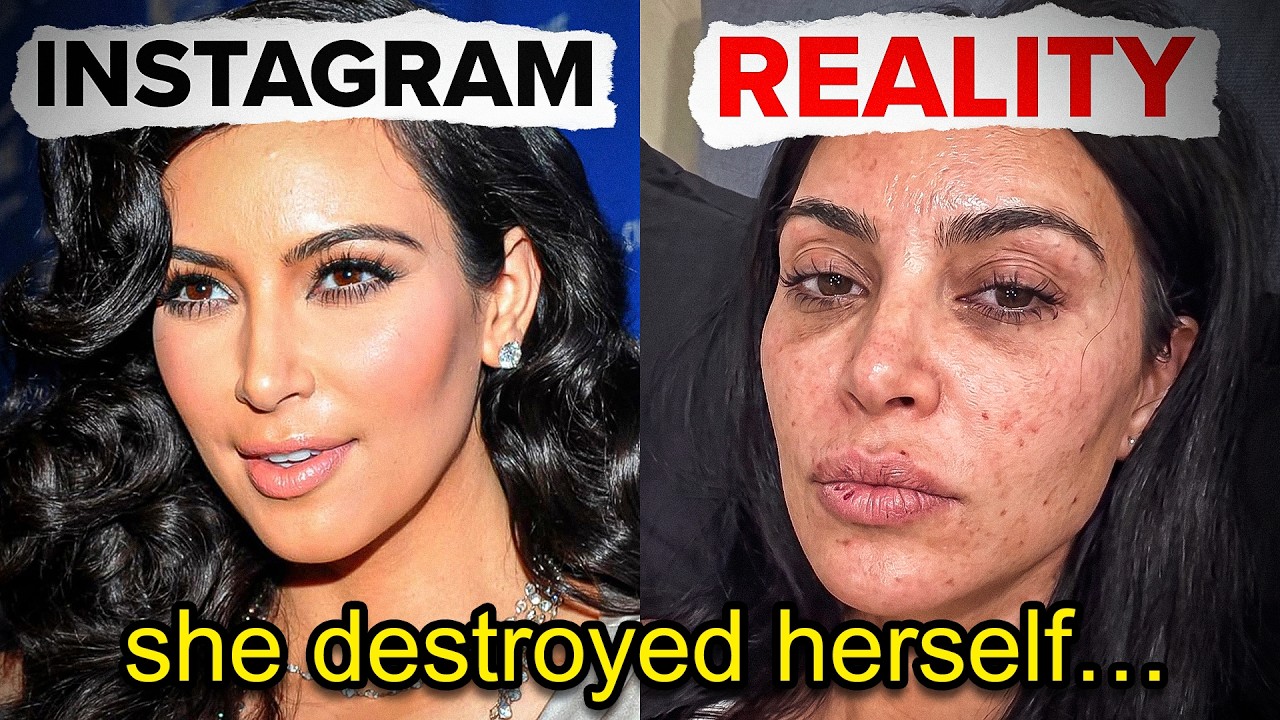
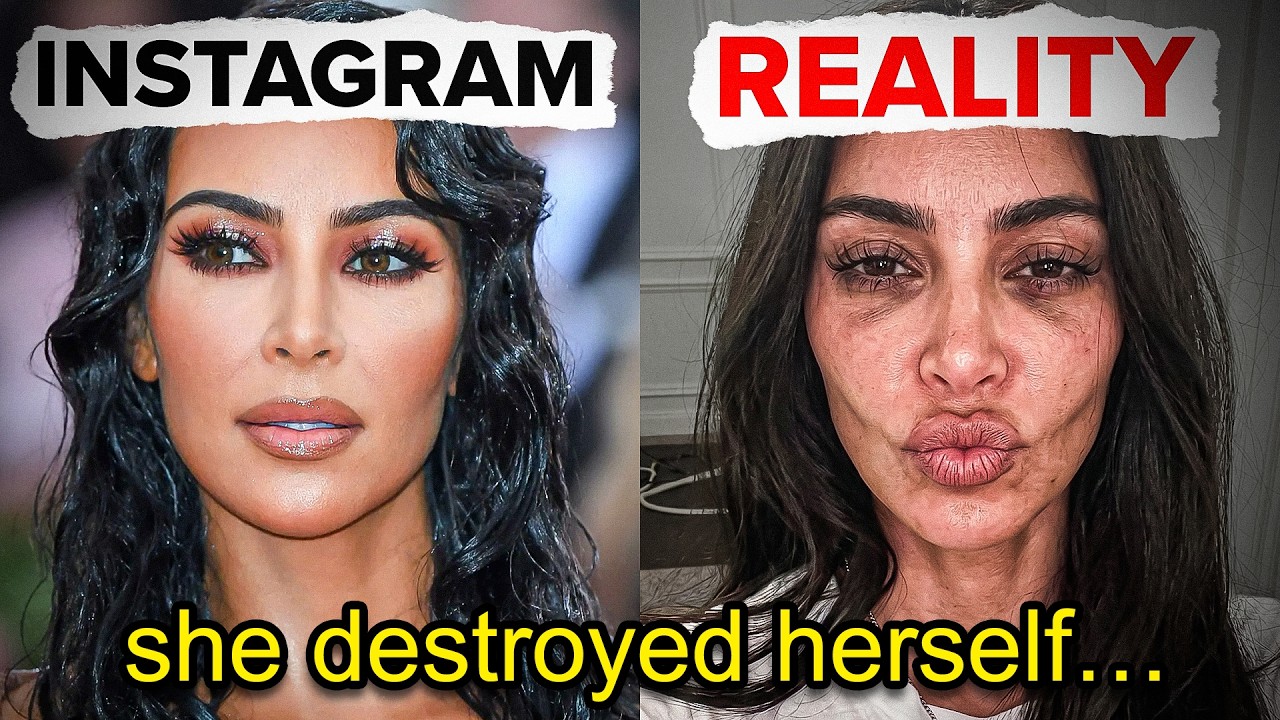
Looking at photographs from Kardashian’s twenties compared with photographs from later stages of her career, it is easy to understand why people speculate. Her nose appears different in some photographs. Her cheeks appear more sculpted. Her jawline appears more defined. Her lips, brows, forehead, and overall facial proportions have also appeared different at various points.
But photographs alone cannot tell us what caused those changes.
A person’s face can change dramatically because of aging, weight loss, pregnancy, makeup, contouring, lighting, hairstyling, orthodontics, skincare, photography techniques, or medical and cosmetic procedures.
In Kardashian’s particular case, the transformation is further complicated by the fact that she has become an expert in makeup and image construction.
Her makeup artist, Mario Dedivanovic, helped popularize techniques such as intense contouring and highlighting, techniques that subsequently became mainstream across social media.
That means some of the apparent changes in Kardashian’s face may have been created—or exaggerated—by makeup alone.
And that is precisely why definitive internet “face maps” should be treated cautiously.
The Hairline Admission
One cosmetic alteration Kardashian has openly discussed is her hairline.
She previously explained that she had laser hair removal performed on the small hairs around her forehead because they contributed to breakouts.
On the surface, this is a relatively minor admission.
But it illustrates something important about Kardashian’s relationship with cosmetic procedures: she often presents them through a practical explanation.
The message becomes less “I changed something because I wanted to look different” and more “I had a reason to fix something.”
There is nothing inherently wrong with either explanation.
Wanting to change something about your appearance simply because you prefer a different appearance is a perfectly legitimate reason. Cosmetic procedures do not necessarily need a medical justification to be morally acceptable.
In fact, one could argue that celebrities would make the conversation healthier by simply saying that.
“I didn’t like it, so I changed it.”
There is nothing particularly scandalous about that.
Why Does the Public Care So Much?
This is where the conversation becomes bigger than Kim Kardashian.
Celebrities have always influenced beauty standards, but social media has radically intensified that influence.
During the early 2000s, cosmetic procedures were frequently discussed in hushed tones. Magazine articles might speculate about a celebrity’s nose job or breast augmentation, but celebrities rarely documented their treatments in real time.
Today, the situation is completely different.
Influencers openly document Botox appointments. They discuss fillers. They review cosmetic clinics. They share recovery videos. They explain their surgeries. Some even post before-and-after photographs.
The secrecy surrounding cosmetic enhancement has therefore become increasingly unusual.
And Kardashian represents an earlier generation of celebrity culture.
She rose to fame when the distinction between “celebrity” and “ordinary person” was still relatively rigid. Her image was carefully constructed through television appearances, magazine covers, paparazzi photographs, interviews, and eventually social media.
Now, audiences expect greater transparency.
That does not mean celebrities owe the public their medical records.
They do not.
But when a celebrity’s appearance becomes part of a billion-dollar commercial empire, the public is naturally going to question how much of that appearance is attainable without access to the same resources.
That is where the ethical conversation begins.
The Unrealistic Beauty Standard
Kardashian has repeatedly emphasized beauty, appearance, and self-care.
In interviews, she has spoken openly about how much she cares about maintaining her appearance and how seriously she approaches beauty treatments.
She has even acknowledged that appearance matters to her more than it does to many people.
There is nothing inherently wrong with caring about how you look.
The problem arises when extraordinary beauty routines are presented as though they require nothing more than discipline.
For the average woman, looking like a Kardashian is not simply a matter of drinking more water, buying the right moisturizer, or following a better skincare routine.
It can involve professional makeup artists, dermatologists, personal trainers, nutritionists, stylists, lighting specialists, photographers, expensive skincare, cosmetic treatments, and an enormous amount of time and money.
And even then, genetics and individual anatomy play a major role.
This is why transparency matters.
A woman who looks at Kardashian’s post-pregnancy body or highly sculpted face and assumes that those results are completely natural may end up comparing herself unfairly with an image that is anything but ordinary.
The issue isn’t that Kardashian looks different.
The issue is whether audiences understand what they are actually looking at.
Beauty Trends Have Come Full Circle
Perhaps the most fascinating part of Kardashian’s story is that the beauty ideal she helped popularize may already be changing.
For years, Kardashian represented maximalism.
Bigger lips.
Sharper cheekbones.
More dramatic contour.
Longer lashes.
Curvier bodies.
Highly polished hair.
Extremely sculpted makeup.
The Kardashian aesthetic was not about blending into the crowd. It was about becoming visually unforgettable.
But beauty culture has begun moving in another direction.
The rise of “clean girl” aesthetics, minimal makeup, natural-looking skin, softer features, and understated styling has created an entirely different ideal.
Suddenly, looking as though you are wearing almost no makeup can be more fashionable than looking heavily contoured.
And this creates an interesting challenge for Kardashian.
How does someone who helped build one beauty ideal remain culturally relevant when the culture begins demanding another?
One answer appears to be reinvention.
The “Natural” Kardashian
In November 2024, Kardashian posted an image of herself studying at a desk while wearing glasses, casual clothing, and relatively understated makeup. The caption referenced law school.
The image was striking precisely because it represented a different version of Kardashian.
Not the glamorous billionaire.
Not the red-carpet celebrity.
Not the woman in a highly produced SKIMS campaign.
Instead, the image presented Kardashian as a busy mother and student who could, at least visually, resemble an ordinary woman trying to get through another long night of work.
And people responded to it.
Many fans praised the softer, more natural presentation.
That reaction says a lot about the current beauty landscape.
The Kardashian brand was built partly on extraordinary glamour. But modern audiences increasingly crave relatability.
The irony is that relatability itself has become a form of celebrity branding.
Being “natural” can now be just as carefully constructed as being glamorous.
A messy bun can be styled.
A makeup-free photograph can be strategically lit.
A casual outfit can be selected by a stylist.
Even an apparently spontaneous Instagram post can be part of an enormous marketing ecosystem.
In other words, authenticity has become something that can be packaged and sold.
The Law School Chapter
Kardashian’s pursuit of legal studies also fits into this broader transformation.
She has publicly discussed her interest in becoming a lawyer and has connected that ambition to her desire to work on criminal justice issues.
At the same time, the image of Kardashian as a future lawyer offers something her beauty empire cannot: a narrative of seriousness.
For years, Kardashian has been criticized for being excessively materialistic, image-focused, and famous primarily for being famous.
The lawyer identity offers an alternative story.
It says that there is more to her than beauty, money, reality television, and social media.
Whether that transformation ultimately becomes a lasting part of her career remains to be seen.
But as a cultural strategy, it is fascinating.
The woman who once represented extreme glamour is now presenting herself as a student, a working mother, an entrepreneur, and a prospective lawyer.
The message is clear: there is more than one version of Kim Kardashian.
The “Underdog” Narrative
Perhaps the most controversial part of Kardashian’s public image is not her appearance at all.
It is the way she sometimes describes herself as misunderstood.
Kardashian has spoken about feeling like an underdog and about wanting people to understand who she really is rather than relying on media narratives.
That perspective can be difficult for the public to reconcile with her extraordinary level of wealth, fame, influence, and access.
But there is a difference between having immense privilege and never experiencing emotional difficulty.
Fame can create its own pressures.
Constant public scrutiny, paparazzi attention, online criticism, and the expectation to maintain a carefully controlled image can be exhausting.
The problem is not that Kardashian may genuinely feel misunderstood.
The problem is that the “misunderstood celebrity” narrative can sound disconnected from the reality experienced by ordinary people.
For someone struggling to pay rent, work multiple jobs, raise children, or afford healthcare, the problems of a billionaire celebrity exist in a fundamentally different universe.
Both realities can be emotionally difficult.
They simply aren’t equivalent.
The Real Story Behind Kim Kardashian’s Face
Ultimately, the most interesting thing about Kim Kardashian’s face may not be what procedures she has or has not undergone.
It is what her face represents.
Her appearance has evolved alongside the internet.
She rose to prominence during the era of reality television, became one of the defining faces of the Instagram age, helped popularize contouring and the exaggerated hourglass aesthetic, and is now operating in a cultural environment that increasingly values authenticity and natural beauty.
Her face is therefore almost like a cultural time capsule.
It reflects whatever the beauty industry was rewarding at the time.
When dramatic contouring was everywhere, Kardashian’s look was intensely sculpted.
When exaggerated curves dominated social media, her body became one of the most recognizable examples of that aesthetic.
Now that minimalism and “natural” beauty are increasingly fashionable, Kardashian can also present a softer version of herself.
That does not necessarily mean she is being dishonest.
It means she is a celebrity operating inside an industry where appearance has enormous commercial value.
And that is perhaps the sadder truth.
The pressure to constantly reinvent yourself can become endless.
You are too young.
Then you’re too old.
You’re too thin.
Then you’re not curvy enough.
Your lips aren’t big enough.
Then they are too big.
Your face isn’t sculpted enough.
Then it looks unnatural.
The beauty industry creates the problem and then sells the solution.
Kim Kardashian is both a product of that system and one of its most successful architects.
What We Should Actually Learn From Kardashian
There is a temptation to turn this entire discussion into a simple accusation: Kim Kardashian changed her face.
But that is too simplistic.
We don’t know the full story.
And frankly, we don’t need to.
What matters more is why millions of people feel compelled to investigate it.
Why are women comparing their faces and bodies with celebrities who have access to resources most people will never have?
Why are cosmetic procedures still treated as something shameful enough that people feel compelled to hide them?
Why is “natural beauty” considered more admirable than openly choosing cosmetic enhancement?
And why do we continue to confuse an Instagram image with an ordinary person’s reality?
Perhaps the healthiest future for celebrity beauty would be one where people can simply say:
“Yes, I had Botox.”
“Yes, I had surgery.”
“Yes, I use fillers.”
“Yes, I wear a lot of makeup.”
“Yes, I have a team of professionals helping me.”
“Yes, I spend a lot of money maintaining this appearance.”
And then move on.
There is nothing wrong with wanting to look beautiful.
There is nothing wrong with aging.
There is nothing wrong with cosmetic procedures.
And there is nothing wrong with choosing not to have them.
The real problem begins when women are encouraged to believe that an extraordinary appearance is effortless—and that failing to achieve it is somehow their own fault.
Kim Kardashian’s face may have changed dramatically over the years. But perhaps the more important transformation is happening around her.
The beauty ideal itself is changing.
And if history is any indication, Kardashian will probably change with it.
That may be the most revealing thing about her entire career: not that she has managed to maintain one perfect face, but that she has repeatedly reinvented the face that the world wants to see.
And in an industry built on selling beauty, reinvention may be the most valuable product of all.