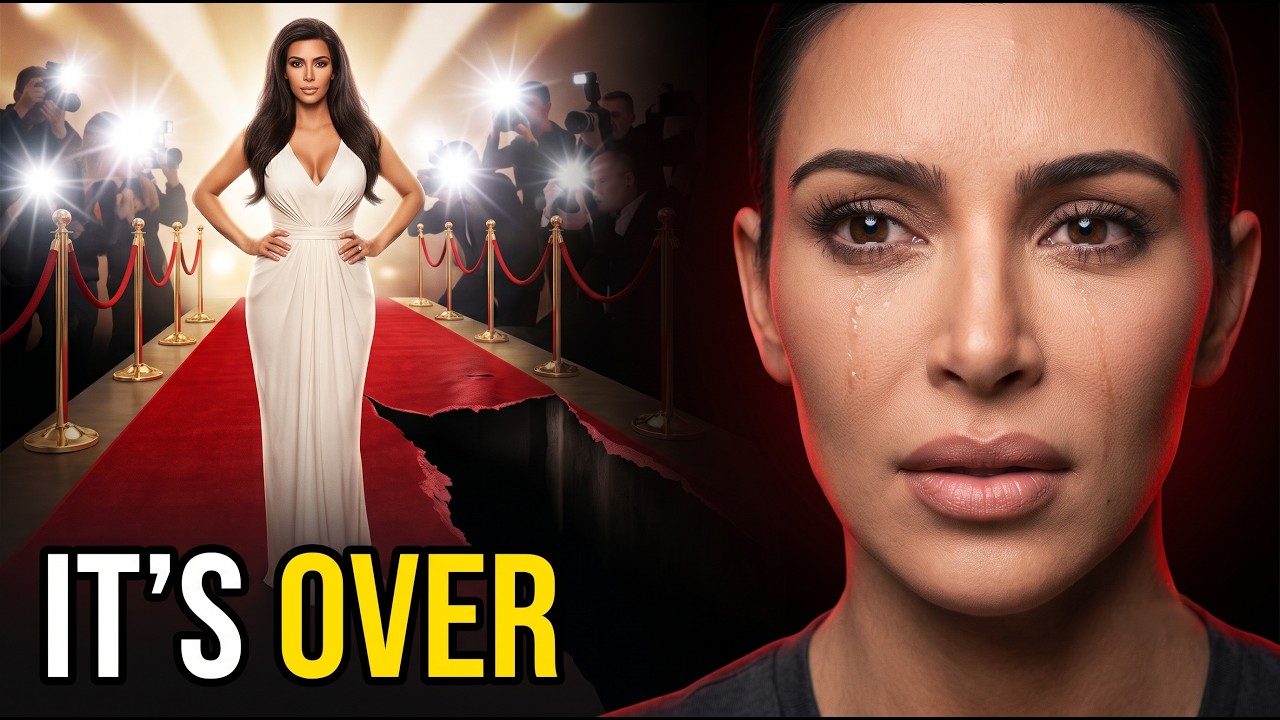
The Year Kim Kardashian Lost Control of the Story
In one week in November 2025, two things landed on Kim Kardashian at almost exactly the same time.
Her new television series, All’s Fair, premiered on Hulu and opened with a stunning 0% critics’ score on Rotten Tomatoes, a number so unusual that it became a story in itself. The series, created by Ryan Murphy and starring Kardashian alongside Glenn Close, Sarah Paulson, Naomi Watts, Niecy Nash-Betts and Teyana Taylor, was immediately savaged by critics. The score later moved upward, but the damage to its reputation had already been done.
And then came the California bar results.
Kardashian had failed.
The contrast was almost too perfect: on television, she played a powerful divorce lawyer. In real life, she had just failed the examination required to become one.
The moment was later filmed for The Kardashians. Kardashian refreshes the screen, sees the result and quietly says, “I didn’t make it.”
She knew before anyone else did.
“I didn’t make it.”
“How do you know?”
“It says fail.”
“No.”
“It’s okay. I figured that.”
The scene is striking because Kardashian has spent nearly two decades mastering the opposite experience. Whatever happened to her, she usually had a way to tell the audience what it meant.
The robbery had a narrative.
The marriages had a narrative.
The businesses had a narrative.
The controversies had a narrative.
Even the scandals had a narrative.
But 2025 and 2026 produced something different.
For perhaps the first time in her career, the story began happening without her permission.
The Kardashian Superpower Was Never What People Thought
Start with what Kim Kardashian actually built, because the mythology surrounding her career can obscure the more complicated reality.
There were businesses that failed.
Dash, the boutique chain she launched with her sisters, eventually closed all of its locations.
The Kardashian Card, a prepaid card marketed toward young consumers, was pulled after widespread criticism over its fee structure.
Khroma Beauty faced a trademark dispute and was forced into a rebrand.
KKW Beauty became a significant commercial enterprise before Kardashian moved on to other projects.
And then there was Skims.
That one worked.
Very well.
The shapewear company grew into a multibillion-dollar brand and became the clearest evidence that Kardashian was capable of turning celebrity attention into a serious commercial machine.
But the pattern was always bigger than the individual products.
The real Kardashian product was attention.
She could take an event, controversy, relationship, outfit, lawsuit or family argument and turn it into something that could be watched, photographed, discussed and eventually monetized.
That was her extraordinary talent.
Not necessarily creating the best product.
Creating the story around the product.
From Scandal to Story
Kardashian’s personal life became content almost by default.
Her first marriage to music producer Damon Thomas ended when she was young. She later discussed the relationship and her own behavior at the time, including her admission that she had used ecstasy when she married him.
Then came Ray J.
Nick Cannon.
Reggie Bush.
Kris Humphries.
The 72-day marriage to Humphries became one of the most scrutinized celebrity weddings of its era, surrounded by television coverage and commercial deals. Humphries later sought an annulment and characterized the marriage as fraudulent for television purposes, a claim Kardashian rejected.
Then came Kanye West.
Four children.
Eight years of marriage.
And a divorce that unfolded publicly across television, social media and headlines.
Then Pete Davidson.
Each relationship became part of the Kardashian media ecosystem.
And Kardashian usually retained the most important thing: the ability to narrate the experience.
That ability became even more important when the story was darker.
In 2016, she was robbed at gunpoint in Paris. Masked attackers entered her hotel apartment, restrained her and stole millions of dollars’ worth of jewelry. Kardashian later testified that she believed she might be killed or raped and repeatedly thought about her children while she was being held.
That trauma was real.
But so was the Kardashian machine built around it.
For years, the public’s understanding of the robbery largely came through Kardashian’s own interviews, television episodes and public statements.
She controlled the microphone.
That distinction matters.
Because eventually, the microphone stopped being enough.
The Handbag That Wouldn’t Go Away
Then came the Birkin.
In late 2025, Kardashian was photographed carrying what appeared to be an extraordinarily rare Hermès Birkin made from elephant hide. The bag also appeared in connection with All’s Fair.
The reaction was immediate.
The issue wasn’t simply fashion.
Elephant leather carries obvious ethical and conservation questions, particularly when associated with an ultra-luxury product.
The internet wanted an explanation.
And for two months, there wasn’t one.
Then, on January 21, 2026, Kardashian finally addressed the controversy on her sister Khloé Kardashian’s podcast. Her explanation was straightforward: the bag was fake and had been obtained as a prop for the production. She pointed to details such as the hardware and construction as evidence that it was not a genuine Hermès piece.
But the explanation did not end the argument.
Some handbag specialists publicly disputed the claim that the bag was fake. One argument centered on the supposedly “wrong” orientation of the hardware. According to that interpretation, the unusual configuration could actually be consistent with early Birkin construction rather than proof of a counterfeit.
In other words, the explanation created another question.
And that is precisely what would have been so unusual for the old Kardashian media machine.
A decade ago, a controversy like this might have been handled within hours.
One Instagram post.
One interview.
One carefully chosen photograph.
Story over.
Instead, the story remained unanswered for weeks and eventually emerged on the friendliest possible platform: her sister’s podcast.
The problem wasn’t necessarily that Kardashian had been caught doing something wrong.
The problem was that she no longer seemed able to decide when the story ended.
Then Came the 0%
The handbag was survivable.
The Rotten Tomatoes score was different.
All’s Fair premiered on November 4, 2025. Kardashian plays a powerful divorce attorney and co-founder of an all-female law firm. The cast is stacked with actors who have decades of experience between them.
The critics were brutal.
At one point, the Tomatometer was sitting at 0%.
It later climbed, eventually settling in the single digits before moving higher as more reviews were counted. Rotten Tomatoes currently lists the first season at 6% from 34 critics.
The headlines practically wrote themselves.
Kim Kardashian couldn’t act.
The show was terrible.
Even the extraordinary supporting cast couldn’t save it.
Yet the numbers told a second story.
After only three days, All’s Fair had accumulated 3.2 million global views, according to Hulu’s internal data, making it the platform’s biggest scripted-series debut in three years.
And that is the paradox at the center of Kardashian’s career.
The critics may have hated the product.
The audience still pressed play.
That is not failure in the conventional Hollywood sense.
It is something much more interesting.
Kardashian had once again demonstrated that she could generate enormous attention even when the thing attracting that attention was being described as terrible.
The product did not have to be universally good.
It only had to be hers.
The Bar Exam Was Different
Then came the problem that couldn’t be solved by ratings.
Kardashian began her legal journey in 2018 through an apprenticeship rather than traditional law school, inspired in part by her late father, attorney Robert Kardashian.
She struggled with California’s “baby bar” examination and ultimately passed it in 2021 after multiple attempts.
She later completed additional requirements on her path toward becoming a licensed attorney.
Then came the July 2025 California bar examination.
She failed on her first attempt.
The result was announced in November 2025, shortly after All’s Fair premiered. Kardashian responded publicly by saying she was not a lawyer yet and that she intended to continue studying.
The distinction is important.
She did not fail the California bar four times.
She failed the baby bar multiple times before passing it on her fourth attempt. The July 2025 California bar was her first attempt at that examination.
But the symbolism was unavoidable.
She was playing a lawyer on television while discovering that she had not yet passed the real-world test.
And unlike a television review, the California bar exam does not care how famous the person taking it is.
There is no public-relations strategy that can turn a failing result into a passing one.
There is no product launch.
No rebrand.
No perfectly edited episode.
No Instagram caption can change the score.
That may be why the moment seemed to hit differently.
Kardashian herself has joked about using ChatGPT while studying and has blamed incorrect AI answers for contributing to problems on tests.
But the deeper issue was not ChatGPT.
It was that the exam produced a result she could not reinterpret.
She could only take it again.
Paris: Trauma and Spectacle
The 2016 Paris robbery returned to the spotlight in 2025 when Kardashian testified at the long-delayed criminal trial.
She appeared in court in May and described being held at gunpoint and fearing for her life. The defendants had been accused of stealing millions of dollars in jewelry, and the case attracted international attention.
Kardashian’s testimony was deeply emotional.
But the optics became another story when she arrived at court wearing jewelry reportedly worth around $1.5 million.
Some saw it as defiance.
Others saw it as spectacle.
Both interpretations could coexist.
The robbery was traumatic.
And Kardashian understood, perhaps better than anyone, how to turn a major public event into a piece of media.
That tension has always been part of the Kardashian phenomenon.
Pain can be real and still become content.
Trauma can be genuine and still be monetized.
Those things are not mutually exclusive.
The Tape and the Loss of the Microphone
The most consequential narrative battle, however, may be the oldest one.
The 2007 tape involving Kardashian and Ray J has followed her for almost two decades.
Kardashian has consistently described the release as a violation and has fought legal battles over the issue.
Ray J has made a very different set of allegations, claiming publicly that members of the Kardashian family knew more about the tape’s release than they have admitted. Kardashian and Kris Jenner have denied those allegations and characterized them as false.
That dispute has now moved through the legal system rather than existing solely in interviews and entertainment coverage.
And that is the fundamental change.
For years, Kardashian was exceptionally good at controlling the public version of complicated events.
Now, some of those events are being interpreted by other institutions.
A judge decides what can remain sealed.
A court determines what evidence matters.
A critic decides whether a performance works.
An exam grader decides whether an answer is correct.
A corporation decides whether a brand remains viable.
A child eventually decides which parts of the family story she wants to tell.
The Kardashian machine cannot edit all of those.
The Business Controversies Keep Coming
The pattern appears elsewhere.
In 2019, Kardashian announced a shapewear company called Kimono. The name triggered cultural criticism, particularly in Kyoto, Japan, where the mayor wrote to Kardashian expressing concern over the use of the word “kimono” and its cultural significance.
She abandoned the name and relaunched the company as Skims.
That rebrand worked.
The 2022 Balenciaga controversy created another reputational crisis after an advertising campaign featuring children and disturbing props triggered widespread backlash. Kardashian said she was reevaluating her relationship with the brand.
Her 2022 appearance wearing Marilyn Monroe’s historic dress at the Met Gala created another controversy. Kardashian lost significant weight to fit into the garment, while preservation experts raised concerns about the use of an important historical textile. Ripley’s Believe It or Not! and Kardashian maintained that the dress had not suffered lasting damage.
Again, the controversy was bigger than the dress.
It was about who gets to decide what a celebrity can do with something that belongs to cultural history.
In 2025, Kardashian’s SKKN by Kim venture was shut down amid Coty’s restructuring of its relationship with the brand, with reports putting Coty’s divestment-related loss at roughly $71 million.
And then there was the Skims faux-hair micro-string thong.
It sold out.
People mocked it.
People discussed it.
People posted about it.
And once again, the attention itself became the product.
Even the Family Has Become Harder to Control
The most revealing conflicts, however, may be happening inside Kardashian’s own family.
For years, Kardashian’s relationship with her sister Kourtney has been turned into television drama.
Their arguments became episodes.
Their disagreements became storylines.
Their personalities became brands.
At one point, their conflict escalated into a physical fight captured by cameras.
The family understood the fundamental rule of reality television:
If the cameras are rolling, the conflict is content.
But the next generation is different.
Kardashian’s daughter North West is now old enough to have her own public identity.
North has experimented with blue hair, grills, piercings, tattoos and music, and has developed a style that is distinctly her own.
Kardashian has defended her daughter’s creativity and rejected accusations that she is an absentee parent. She has also described taking time away from work to focus on North’s education.
Kanye West has publicly offered a different perspective.
Once again, the important point is not which side wins the argument.
It is that Kardashian no longer has complete control over the narrative.
There are now other people with enormous audiences who can speak directly to the public.
Her children will eventually tell their own stories.
Her former husband already does.
Her sisters do.
Critics do.
Courts do.
Brands do.
And the internet does it constantly.
The One Story That Still Looks Perfect
Which makes the apparent smoothness of Kardashian’s relationship with Lewis Hamilton particularly interesting.
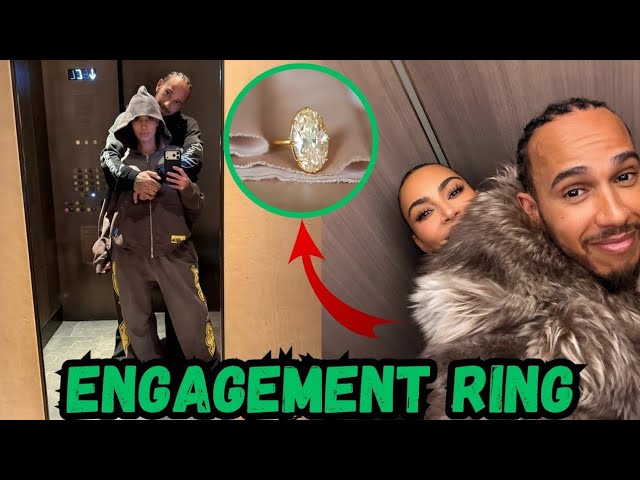
Their romance was reportedly soft-launched in Paris before becoming increasingly public through major appearances and social-media moments, including the Super Bowl, Coachella, Monaco and family-related posts.
Whatever the relationship ultimately becomes, the public rollout has been remarkably controlled.
There are no obvious leaks destroying the narrative.
No public feud.
No messy legal dispute.
No competing version of events dominating the headlines.
The rollout is polished.
Perhaps that is coincidence.
Perhaps it is simply what happens when two extraordinarily media-savvy people understand the value of timing.
But symbolically, it represents something important.
It is one of the few major stories in Kardashian’s life that still appears to be unfolding according to a script she understands.
So, Is This a Downfall?
Not exactly.
Kim Kardashian is not broke.
She is not irrelevant.
Skims remains an enormous business.
The Kardashians continues to attract viewers.
And All’s Fair, despite catastrophic reviews, demonstrated that Kardashian still possesses something most Hollywood stars would desperately want: the ability to make millions of people watch.
That is not a downfall.
It is a different kind of crisis.
For nearly 20 years, Kardashian’s greatest talent was not simply becoming famous.
It was controlling the meaning of her fame.
Something happened to her?
She explained it.
Something was leaked?
She responded.
A marriage collapsed?
She turned it into a storyline.
A business failed?
She launched another one.
A controversy exploded?
She reframed it.
A scandal became global?
She became the narrator.
But 2025 and 2026 introduced a different set of opponents.
Critics.
The California bar.
Courts.
Business partners.
Conservation and fashion experts.
And, increasingly, members of her own family.
None of them needed her permission to tell their version of the story.
That is the real shift.
Kim Kardashian did not suddenly become unsuccessful.
She did not lose her fortune.
She did not disappear.
She lost something more subtle and, for her, potentially more important.
She lost the microphone.
The November 2025 week captures the transition perfectly.
A television show opened at 0% with critics.
A bar examination came back with a failing result.
And somewhere in the middle was a handbag that took two months to explain.
Each event, by itself, was survivable.
Together, they revealed a pattern.
The Kardashian machine still knows how to generate attention.
What it can no longer guarantee is what that attention will mean.
And perhaps that is the first truly unfamiliar position Kim Kardashian has occupied in twenty years:
not the woman writing the story,
but the woman waiting to see what everyone else writes.
So the question is not whether Kim Kardashian has fallen.
She hasn’t.
The more interesting question is whether she has entered a new phase of celebrity — one in which the most powerful person in the room is no longer automatically the person holding the pen.
For the first time in a very long time, Kim Kardashian may have to live with the story before she gets to rewrite it.
And that may be the most consequential change in her career.